
RAV4 general maintenance
Toyota RAV4 Fuel Economy Checks Before Replacing Parts
Poor fuel economy can reflect operating conditions, tire or brake drag, maintenance state, sensor data or driving pattern; use a measured diagnostic path.
Fuel use should be compared over several similar trips and full-tank records before a small change is treated as a fault. Weather, load, speed, congestion and short-trip operation can move the result. When the decline is repeatable, basic inspection and scan data can help separate service items from a deeper engine or emissions problem.
Application boundaries
Know what changes the inspection.
Record the vehicle branch and the physical evidence before applying any maintenance decision.
Preparation
Have the right information and equipment ready.
- Fuel receipts or measured energy-use records with distance and dates
- Cold tire-pressure readings and the correct vehicle pressure reference
- Notes for route, weather, load, roof equipment, towing and idling
- Diagnostic scan data from suitable equipment when warnings or driveability symptoms exist
Practical sequence
Use four controlled steps.
Stop when the condition exceeds routine inspection or the applicable procedure requires specialist tools.
- 01
Verify the change
Compare like-for-like trips, tire pressures, load, fuel and ambient conditions instead of one dashboard reading.
- 02
Check simple restrictions and drag
Inspect air filtration, obvious intake damage, brake drag indicators and maintenance history.
- 03
Read evidence before replacing sensors
Use fault codes, live data and wiring checks as diagnostic evidence, not as an automatic purchase order.
- 04
Confirm the repair result
Record fuel use after the cause is corrected and under comparable conditions.
01 · Inspection note
Establish a reliable baseline
Use distance and measured fuel quantity across multiple fill cycles where practical. Separate unusual towing, roof loads, heavy traffic, idling and very short trips. A realistic baseline avoids replacing components for a change caused by use rather than a fault.
02 · Inspection note
Inspect the air and ignition path
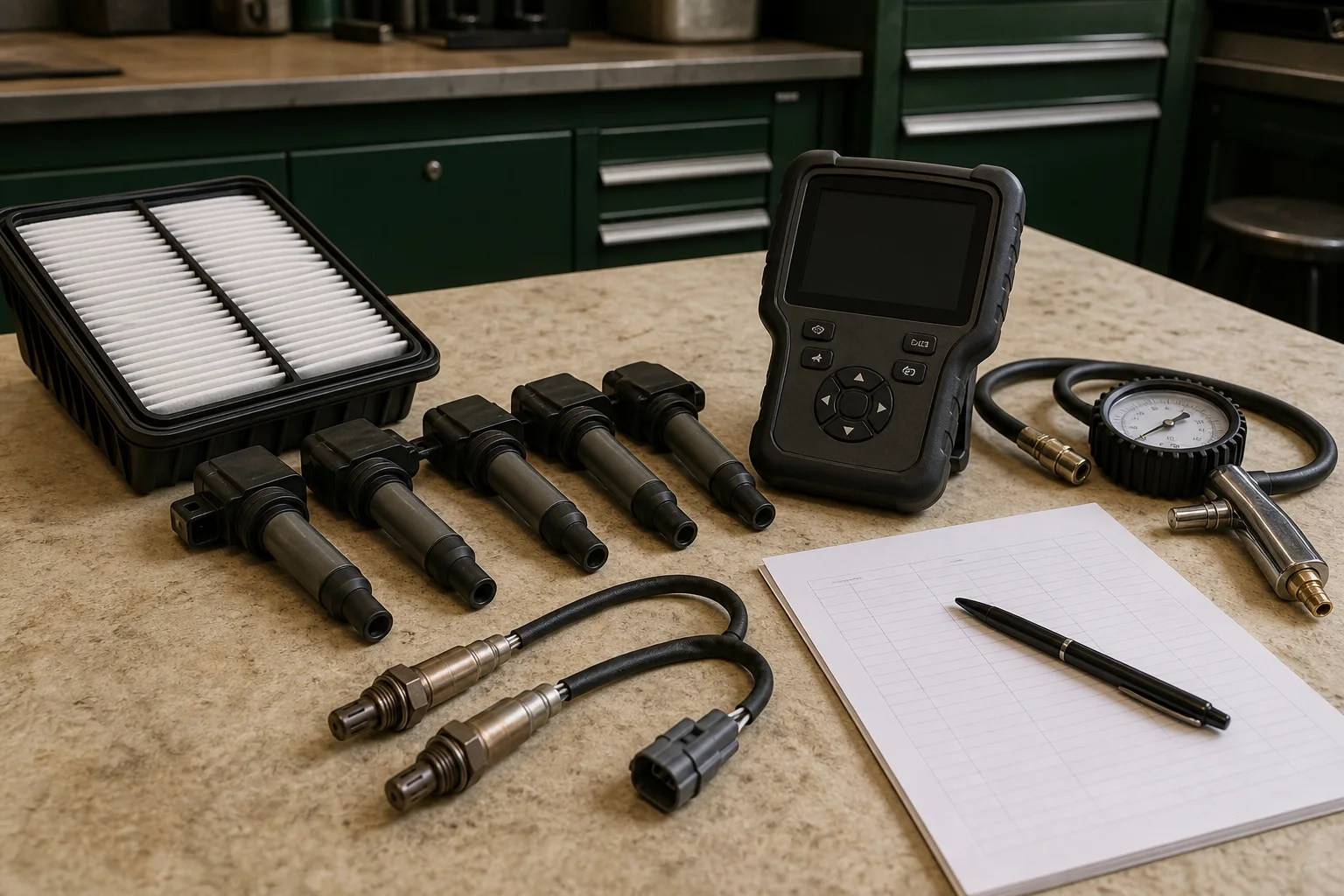
A badly restricted air filter, damaged intake duct or ignition fault may affect operation, but appearance alone does not justify every replacement. Check the correct RAV4 air filter housing and preserve ignition-coil connector and label evidence before ordering.
03 · Inspection note
Treat oxygen-sensor data as part of a system
An oxygen-sensor-related code can also reflect exhaust leaks, wiring, mixture problems or another sensor. Identify upstream or downstream position, engine and connector before sourcing. Do not select one universal sensor from thread size alone.
04 · Inspection note
Include rolling and service conditions
Incorrect tire pressure, alignment problems, brake drag and unsuitable fluids can affect energy use. Hybrid vehicles also have system-specific thermal and electrical checks. The safest workflow is diagnosis, documented identification, written part scope and a comparable post-repair measurement.
Common mistakes
Avoid errors that hide the real condition.
These mistakes can lead to a wrong part, an incomplete repair or an unsafe result.
Chasing one short trip
Traffic, temperature and warm-up time can overwhelm the effect of a maintenance item on a brief journey.
Replacing every coded component
A code identifies a circuit or operating condition; wiring, leaks and related systems still need diagnosis.
Ignoring rolling resistance
Brake drag, tire pressure, alignment and added aerodynamic load can reduce economy even when the engine operates normally.
Post-work verification
Check the result before normal use.
Repeat the same measurement method after correcting a confirmed cause. Compare multiple similar trips, verify that warning lamps remain off, and check that no new odor, heat, misfire or braking symptom was introduced.
Safety boundary
Fuel odor, misfire, overheating, brake overheating, warning lamps or high-voltage alerts need prompt qualified diagnosis. Do not continue driving merely to complete a fuel-economy test.
Related parts
Compare the RAV4 components involved in this check.
Use position, dimensions, connectors, labels and the removed component to narrow the correct replacement. Model year alone does not confirm fitment.
RAV4 air filters
Compare application boundaries, physical identifiers, variants and the items included in the quotation.
RAV4 parts identificationRAV4 ignition coils
Compare application boundaries, physical identifiers, variants and the items included in the quotation.
RAV4 parts identificationRAV4 oxygen sensors
Compare application boundaries, physical identifiers, variants and the items included in the quotation.
RAV4 parts identificationRAV4 brake pads
Compare application boundaries, physical identifiers, variants and the items included in the quotation.
Common questions
Clarify the decision before starting work.
Use the answers with the applicable vehicle information and stop when diagnosis or specialist service is required.
Will a new oxygen sensor always improve fuel economy?
No. Replace a sensor only after its position, application and failure are supported by diagnostic evidence.
Can a dirty air filter be identified by color alone?
No. Use the applicable inspection guidance and check restriction, damage, sealing and service history.
Continue learning
Related RAV4 maintenance guides.
Compare related symptoms, service items and identification checks before deciding what work or replacement is needed.

How to Build a Practical Toyota RAV4 Maintenance Inspection Plan
Use condition, mileage, operating environment and service records to decide what needs inspection before buying replacement parts.
Read guide →
Toyota RAV4 Pre-Trip Parts and Safety Checklist
A pre-trip check should find safety or reliability concerns early without encouraging roadside repairs beyond the operator’s competence.
Read guide →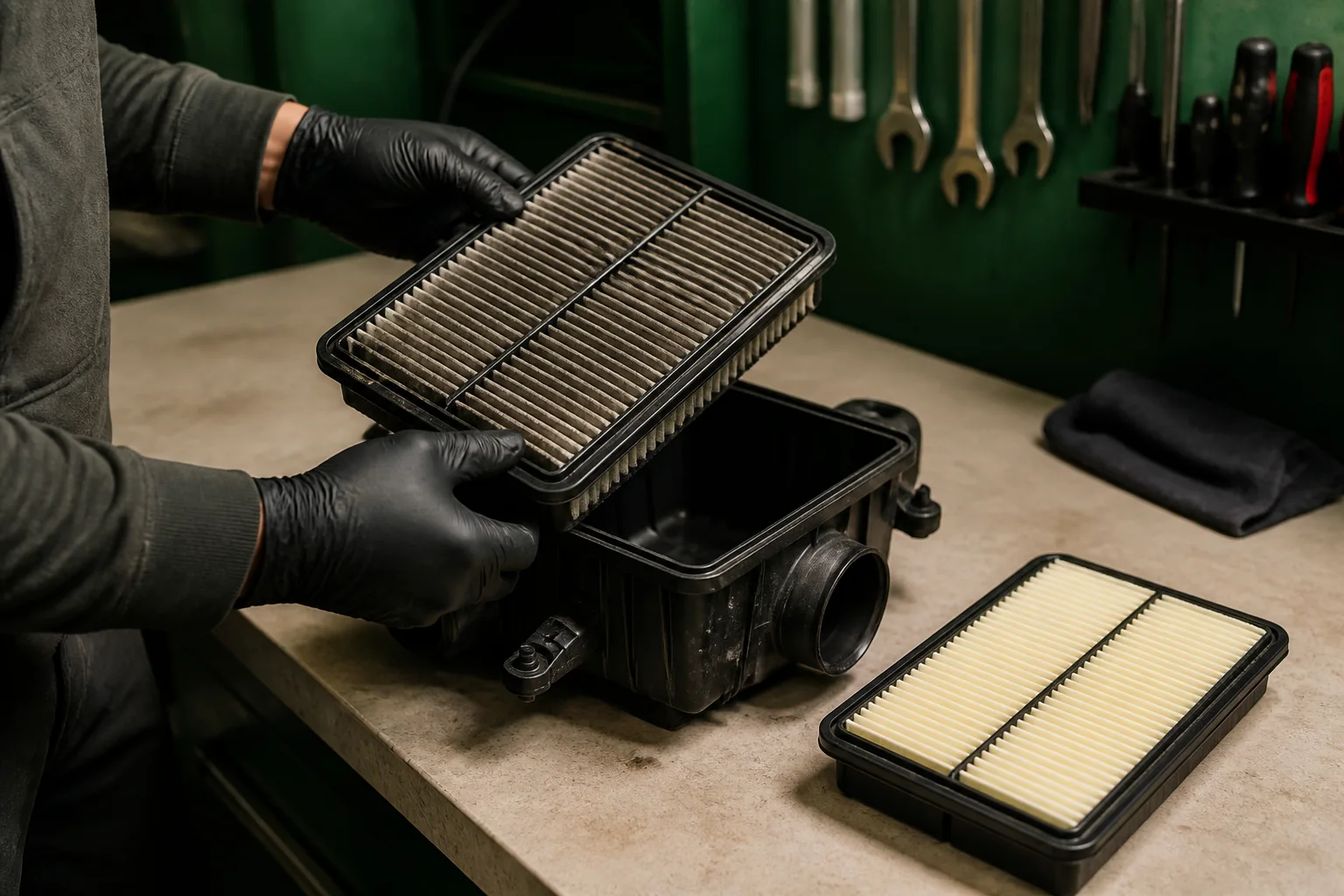
How to Inspect and Replace a Toyota RAV4 Engine Air Filter
Check the installed housing, seal and filter dimensions before replacement; dirt color alone does not prove restriction or correct fitment.
Read guide →